Investigation and evidence
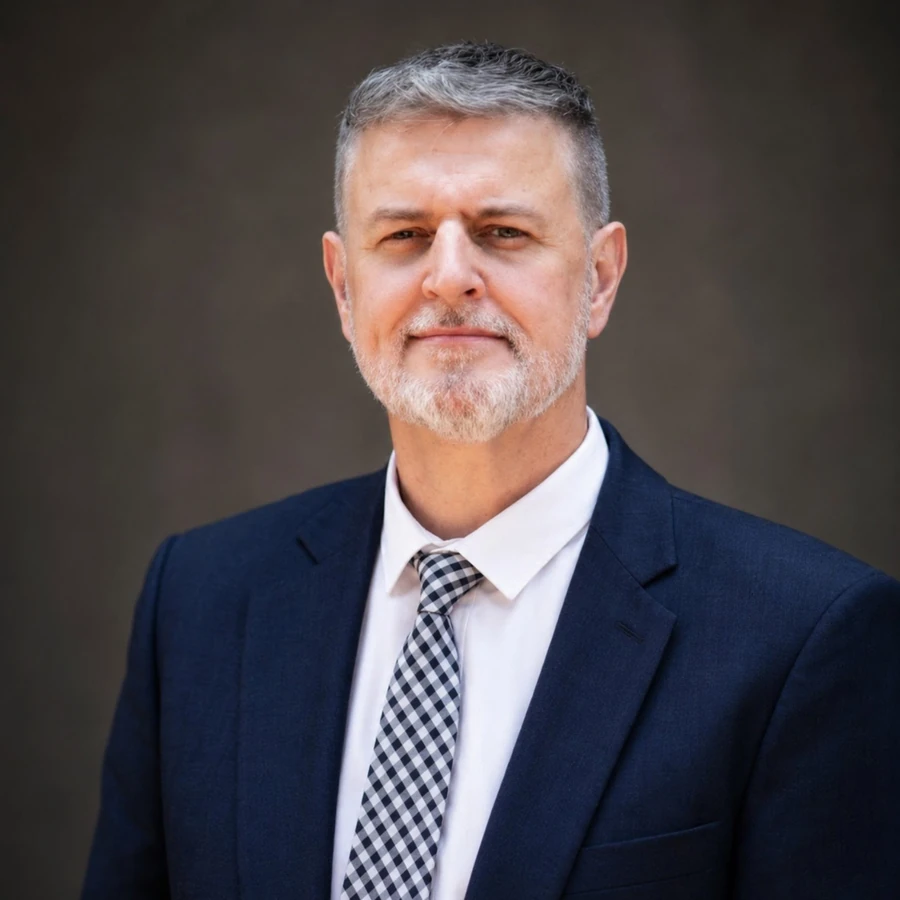
Paul leads scoping, investigative judgement, evidence assurance, reliance decisions, quality control and final human approval.
Our People
Aperture Research Works keeps responsibility visible. Human judgement controls acceptance, scope, evidence challenge, limitations and final approval, with technology used to support discovery, organisation and comparison.
How responsibility is divided
Paul leads scoping, investigative judgement, evidence assurance, reliance decisions, quality control and final human approval.
Paul and Xandro contribute to framework, research-system and product development. Paul also leads the development of the web and digital operating environment used to present and support the work.
Xandro contributes to marketing, market development, prospective-client communication, client follow-up, articles, publication, website content and the public presentation of Aperture Research Works.

Founder & Principal
Evidence strategy, complex research and decision assurance.
Paul Hattingh is the founder and principal of Aperture Research Works. His background spans technology, entrepreneurship, commercial problem-solving and research across a wide range of fields.
Long before Aperture, he worked in and around information technology and built businesses in environments where technical systems, commercial realities and human judgement had to work together. That experience shaped the way he approaches research today: not as an exercise in collecting information, but as a structured process for understanding systems, testing assumptions and identifying the facts that can materially change a decision.
His work is particularly suited to questions that sit between conventional professional disciplines. A matter may involve corporate records, technology, financial representations, ownership, scientific literature, regulatory history, chronology, public claims or several of these at once. Rather than pretending to be the specialist in every underlying field, Paul’s role is to define the factual question precisely, trace the strongest available evidence, identify contradictions and gaps, and recognise where specialist judgement is required.
He leads Aperture’s research design, evidence analysis and final human review. His approach combines systems thinking, commercial judgement, technical literacy and a strong preference for source-traceable conclusions over assumption or narrative.
Paul tends to approach a matter as a system rather than a document set. Who is making the claim? What would have to be true for it to hold? Which records should exist if it is true? Which sources are genuinely independent? What would contradict it? What is missing? And at what point does the question require a regulated or specialist professional?
The common thread is simple: understand the system, isolate the proposition that matters, and establish what the evidence actually allows a decision-maker to rely on.

Commercial Research & Business Development
Business thinking, structured research and commercially useful evidence.
Xandro Hattingh works across commercial research, business development and the structured application of Aperture’s evidence methods.
His business-management background gives him a grounding in how organisations make decisions, allocate resources, assess opportunity and manage risk. Within Aperture, he applies that commercial perspective to research problems, market development, client needs and the practical translation of evidence into useful business decisions.
He is particularly interested in the point where research becomes commercially useful: identifying the real question behind a request, understanding the decision environment, organising information into a coherent structure and helping determine what further evidence would materially change the answer.
Xandro also contributes to the development of new Aperture applications and markets, bringing a younger commercial perspective to the firm’s work across business, research and evidence-intensive decision-making.
Xandro tends to begin with the commercial question: what decision is being made, what information is material to that decision, and what would actually change the outcome? From there, he helps structure the research around the facts that matter rather than around the volume of information available.
His role complements Paul Hattingh’s broader systems and evidence leadership by adding a strong focus on commercial context, structured execution and the way clients actually use research in practice.
Working together
1 · Understand the need
Aperture Research Works first identifies the problem, decision or uncertainty. Xandro may support initial communication and follow-up; Paul determines whether and how the matter can responsibly be scoped.
2 · Test the evidence
Research is organised around the evidence question. Paul leads material investigative judgement, with research systems and supporting development contributing where appropriate.
3 · Communicate responsibly
Findings are presented with limitations and contrary evidence visible. Paul controls final professional approval; Xandro may support client communication, articles, publication and public presentation.
Verifiable public record
Aperture does not use vague team-size claims or borrowed credentials as a substitute for evidence. The public record gives a buyer concrete points to inspect:
Paul Hattingh is identified as Founder & Principal and controls scope, evidence judgement, quality and final human approval. Xandro Hattingh’s commercial research, development and publication responsibilities are stated separately.
Selected Work contains full public-source demonstrations so that buyers can inspect reasoning, sources, limitations and presentation rather than relying on biography alone.
The foundational framework is preserved at DOI 10.5281/zenodo.18173113. The DOI is a public record, not accreditation or a licence.
Evidence boundary: No qualification, registration, client history or institutional status is claimed here unless it can be stated accurately and supported.
Protected method
Public materials explain the professional standard and client-facing process. Detailed non-public methodology, workflows, templates and controls remain proprietary and confidential.